

.
WTI Short Courses
Aimed at beginner and experienced trackers
.
Short Courses
Multi-level instruction, from an afternoon to a weekend
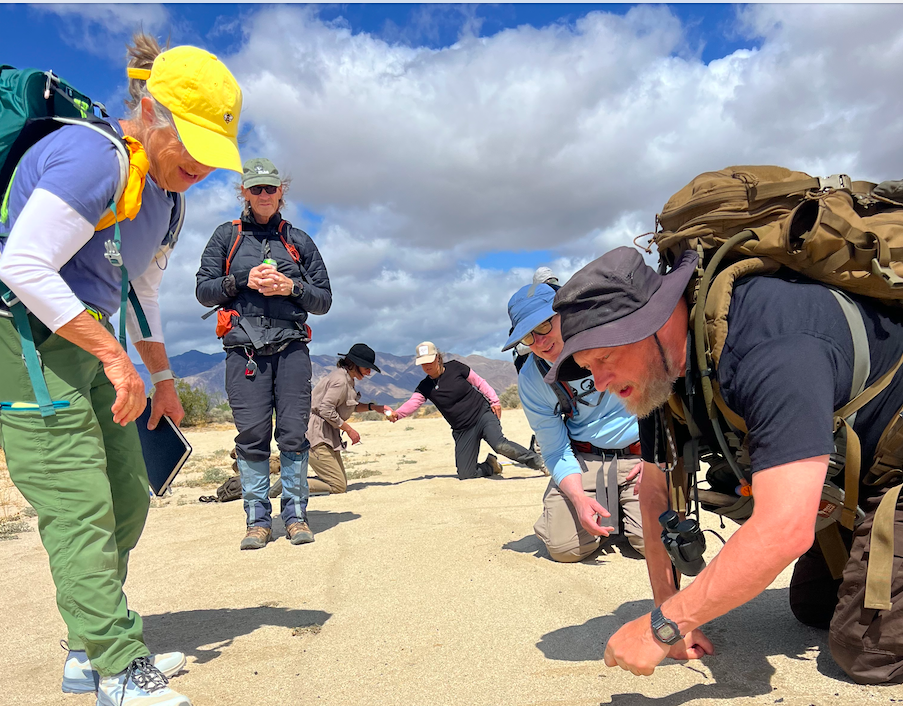
Our field-based tracking curriculum has classes to fit all schedules and commitment levels. If our 5-month Southwest Tracking Intensive isn't the right fit, we offer short courses designed to meet you where you're at in your tracking journey. Our short courses are open to all skill levels—our instructors have years of experience under their belts mentoring beginning through advanced trackers, and our 10-student maximum class size means you'll get lots of individual attention during the class.
Our short courses range from an afternoon to a full weekend, and just like our long-term programming, they're field-based and immersive.
Please contact us here with questions about our short courses.
Short Course Descriptions
Advanced Tracking Fundamentals: field skills for every experience level—1 day or 2 days
This comprehensive course covers the WTI tracking process, and is aimed at both beginner and advanced trackers—no matter your experience level, you'll find something here that can improve your tracking skills and deepen your connection to your home turf. You'll spend full days out in the field with WTI instructors, and get a comprehensive look at the tracking process we use to identify and interpret animal sign, and earn high-level CyberTracker certifications. In addition to a ton of field time, you'll walk away with a complete toolkit to continue learning on your own, and make progress no matter where you are in your tracking journey.
Over the years, we've found that when we run standard tracking classes, where we head out into the field to discuss track and sign without first discussing our tracking process, we end up talking about process anyways. Our brains are wired to reduce effort and take shortcuts—so unless we train ourselves to be systematic and work through all possible answers, we often end up guessing or taking the easy way out when we get tired or stressed. In order to become the best trackers we can be, we have to start with the foundation—our tracking process—and work our way up.
We start by defining what a tracking process is, and why you should have one. Random guesses about track ID or the marking sign on a tree will not build your tracking skillset or ecological literacy—but using a well-defined and focused process to parse through the information around you will give you the best chance of really understanding what the animals are doing when you're not around.
Next, we'll take a deep dive into observation skills, focusing on how to train our eyes and brains to perceive subtle visual information on the landscape as we look for evidence of wildlife and decode their behaviors. We'll learn a multitude of observation techniques, including those used by fine artists, military intelligence officers, and some that WTI instructors have personally developed in the field.
After we've laid out our observation skills, we'll get to the meat of the process—using our knowledge of the animals in that particular location to narrow down our list of potential identifications, and interpret the story on the ground. And we'll get plenty of practice doing this. With two long days in the field, we'll have time to cover a ton of material, and make sure you leave with a deep and complete understanding of how to use your new-found skills in your personal tracking practice.
Upcoming Advanced Tracking Fundamentals dates: None scheduled. Be in touch if you want to talk about hosting this short course.
Finding the Animal: an introduction to trailing—1 day or 2 days
Do you want to learn to find animals in the field, and observe them as they live their lives? Then Finding the Animal is for you. You'll get a ton of practical learning on how to locate animals, and leave with a strong foundation of skills to take this practice as far as you want.
CyberTracker field assessments break down tracking into two component skillsets—track and sign, and trailing. In North America, most of what we call tracking is in fact track and sign—the identification and interpretation of evidence that animals have left behind on the landscape. But the second skillset, trailing, is what most people envision when they hear the word tracking: following a set of animal tracks until you locate the animal itself, hopefully before the animal realizes that you're watching.
In this fully field-based short course, which can be a half day, a full day, or two days, we will introduce the basic concepts of trailing, and then get plenty of practice looking for a fresh trail and following it. We'll start with track aging—learning to determine whether tracks are fresh enough to follow, based on the substrate and recent weather conditions.
After we cover track aging, we'll move across the landscape, looking for animal trails and using our newfound skillset to decide whether or not they're fresh enough to follow. Finding fresh trails is the crux of any trailing practice—if you spend your time following trails that are too old to catch up to the maker, you'll never see animals.
If we find a fresh trail, we'll follow it, and introduce the basic concepts of re-finding the trail when we lose it—because all of us, even the best trackers in the world, frequently lose the trail. If we don't find a fresh trail, we'll either create one ourselves, or work with older trails that are still followable, in order to introduce the key concepts you'll need to continue your trailing practice on your own. Either way, you'll leave this course with all the necessary components to continue your practice on your own.
Upcoming Finding the Animal dates: None scheduled. Be in touch if you want to talk about hosting this short course.